Hilarey.com

Intimacy with God for the Overchurched Blog

Menu
  • About
  • Books & More
    • Narrating
    • Contact
  • Coming of age series
    • Sovereign Ground
    • Heart of Petra
    • Sworn to the Desert
  • Historical Fantasy Series
    • Stone of Asylum
    • The Reckoner’s Blade
    • Heiress of Coeur d’Alene
Menu

Tag: remain on the vine

Judge God

Posted on April 3, 2026March 31, 2026 by Hilarey
3 of 3 | Part 1 Judge Yourself & Let No One Judge You | Part 2 Judge No One & Judge Others | Part 3 Judge God

“I choose the appointed time; it is I who judge with equity. When the earth and all its people quake, it is I who hold its pillars firm. To the arrogant I say, ‘Boast no more,’ and to the wicked, ‘Do not lift up your horns. Do not lift your horns against heaven; do not speak so defiantly.’ ”No one from the east or the west or from the desert can exalt themselves. It is God who judges: He brings one down, he exalts another. In the hand of the Lord is a cup full of foaming wine mixed with spices; he pours it out, and all the wicked of the earth drink it down to its very dregs.””
‭‭Psalms‬ ‭75‬:‭2-‭8‬ ‭(NIV‬‬)

“If any man worship the beast and his image, and receive his mark in his forehead, or in his hand, The same shall drink of the wine of the wrath of God,”
“and great Babylon came in remembrance before God, to give unto her the cup of the wine of the fierceness of his wrath.”
Revelation 14:9-10 & Revelation 16:19 (KJV)

Where were you when I laid the foundations of the earth?

Even though much will be left unsaid, this is the final in the series. I love this picture I found for the post. I am mortal, lifting up scales to an eternal God.

An LDS friend told me her faith believes human souls are waiting in heaven for bodies. Hence, the need for large families, providing the bodies. I don’t know of Protestant faiths that believe their souls originated in heaven. Some believe it sparks to life at conception, but because God breathed life into Adam’s nostrils, I wonder if the first breath is significant. Some say our first and last intake “Yah” and exhales “Weh” makes the sound of God’s name, Yahweh.

I don’t want to focus on when the soul arrives, other than to say only God is immortal. It is arrogant thought to assume a part of us is inherently eternal. The idea of immortal souls didn’t come from Hebrew Scriptures; it came from Plato, and it’s understandable that we accept it because Greek philosophy shaped our Western thinking. The Bible Project talks about the word that is most often translated as soul here.

Return to dust, you mortals

You know the story—don’t eat from the Tree of Knowledge, or you will die. Was “die” hyperbolic? Did their soul/spirit die within their flesh at that moment? Are we assuming “you will surely die” meant God knew he would kick them out of the garden so they couldn’t eat the Tree of Life anymore, and then they would eventually die?

Job said his life came from the breath of the Almighty. After Jesus rose from the dead, he breathed on them and said, receive the Holy Spirit. So, I have wondered if this born-again breath is not connected to what perished in the garden.

All I understand is that, figurative or literal, access to the Tree of Life was granted and revoked in the garden of Eden, death entered, God desires none should perish (or die), but all would have eternal life instead—and the end of the book, Revelation 22 describes access granted to the Tree of Life again in our future so we will live forever.

It’s probably too ingrained in you, from the foundational philosophers of Western civilization, to let go of the idea that some part of you will live forever, naturally, in your own power, even in rebellion to God.

This is the context I am coming from. I do not believe any part of us is inherently eternal—and I’ve highlighted this to show my fearsome reverence for God, before I share my boldness on judging him.

“I said, ‘You are “gods”; you are all sons of the Most High.’ But you will die like mere mortals; you will fall like every other ruler.” Psalms‬ ‭82‬:‭6‬-‭7‬

Taste, and see

  • When you first turn to God, you have judged him worthy.
  • Every time you submit, and believe his definition of sin, yielding a bit more of yourself to him, you are making a judgment that you can trust him.
  • When you do not do what he commands, you are judging him untrustworthy.

We’re invited to taste and see that the Lord is good. An action that results in consideration, opinion, and finally declaring a verdict on God.

In my last post, I wrote about our divine desire for justice because we’re made in the image of the righteous judge. Do you think God would give us the desire for justice and the ability to judge, but then tell us not to use it on Him—as though the giver of that justice might not stand up to it?

This concept of measuring God is unfamiliar to me. And these are probably new thoughts for you if you were raised to fear God, hell, Satan, sinners, your parents, an unchecked government, the world, hip-hop, and yourself. But taste and see—how could you walk boldly into the throne of grace if you’ve always believed he is arbitrary, punitive, and unjust?

Look at the language God uses in Isaiah, “Come now, let’s us reason together.” This is a God who wrestles with humans. Moses and Abraham both verbally sparred with God to intercede for the ones they loved. Although love might be a strong word for what Moses felt for the Israelites…

Jeremiah has a humble posture when he comes to God and says he’d like to have a word with him, but look also at his boldness.

“Yet I would speak with you about your justice…
You will be in the right, O LORD, when I lay charges against you,
but let me put my case to you.
Why does the way of the guilty prosper?
Why do all who are treacherous thrive?”
Jeremiah 12:1

Is this not the cry of your heart right now? How much healthier to lay it out on the table than to pretend like you aren’t lifting scales and inspecting the balance, waiting to see what the Lord will do. Stand on the edge of the cliff with Abraham and the Lord and echo, “Will not the judge of the earth do right?”

Come now, first let us reason together ways not to judge God

Do not judge God by

  1. his leaders
  2. an (English) translation
  3. your limited knowledge
  4. how you think this story should end
  5. the people who smear his name
1. Do not judge God by his leaders, even the chosen ones like Saul

I mentioned last week that Eli had two sons who used their religious power in the temple to oppress financially and sexually. Eli knew about it and confronted them, but just as we saw in the recent SBC scandals (and have seen in many others) no one was punished and often not even restrained. Eli’s bloodline was supposed to be priests forever. God’s answer is that he will still honor his promise to the lineage, but the two guilty sons will die on the same day. Additionally, every descendant of theirs will die in the prime of life.

Eli still doesn’t punish them.

Samuel comes on the scene as a weaned child and in a sweet story hears God’s voice in the night. In the morning Eli wants to know what God said, but young Samuel doesn’t really want to tell him, “Uh, sir, God said your sins cannot be atoned…” Verse 14. They could not be atoned by anything Eli currently did in the temple. There was nothing set up under that priesthood that could atone for it.

But Eli convinces Samuel to be scary-honest. Verse 18, “So Samuel told him everything, hiding nothing from him. Eli replies, “He is the Lord; let him do what is good in his eyes.””

So great is the irreverence of Eli’s two sons, who have wielded religious power their whole lives, that they take the Ark of the Covenant out to the battlefield like God is also theirs to wield. 1 Sam 4 says the slaughter was great; Israel lost thirty thousand foot soldiers. The Ark of the Covenant was captured, and Eli’s two sons, Hophni and Phinehas, died (just as promised on the same day.)

When Eli hears his sons are dead and the Ark is captured—it is news of the Ark that devastates him. He was quite heavy. (Maybe he also benefited from those first-choice cuts of meat that his boys were stealing.) Eli falls back from his chair, breaks his neck, and dies. Then his daughter-in-law hears and dies giving birth. Already the family line is perishing in the prime of life. Eli had led Israel for 40 years.

God will deal with corrupt leaders—and keep his promises at the same time. That we want and need him to, illustrates how everything inside us cries out against the problem of sin and iniquity.

Rethinking Hell is a heady collection of essays from multiple scholars about conditional immortality. On page 216 note 35, one argues, “However, if God is the author of morality, God‘s own actions must ultimately be shown to conform to the moral principles God imposes on humanity…”

God presented Christ as a sacrifice of atonement…to demonstrate his righteousness. Romans 3:25–26. The fact that it’s a demonstration means it’s an invitation to observe and judge. God has come to an unbelieving world and put his character before us to win our fear, repentance, and love.

2. Do not judge God by translation philosophies

The Bible only says that it is useful for training, and not one jot of the law will pass away until everything is finished. The Bible does not say your understanding of the translation in your hand in inerrant.

I’ve talked before about spiritual bypassing and cognitive dissonance by shrugging our shoulders and saying, “The Lord is mysterious, and I can’t trust me.” Growing up in church can be a little like the story of the Emperor’s New Clothes. This is how it seemed to me when my kids started talking. They pointed out things that I had practiced ignoring. I was in the habit of believing, “I can’t understand that. I’m sinful. I’m uneducated. God is sovereign.”

Christians are sometimes the crowd around the emperor, assuring the world they see elegant clothes with cheap phrases and pat answers. That hasn’t worked for the generations who’ve had access to a wider community and can ask the internet if they don’t buy the platitudes.

Sometimes the problem is in the translation itself or the translation philosophy. Like an idiom lost to time, some words would have made sense to the reader but don’t show up anywhere else in the Bible, so the nuance has to be assumed. Sometimes it’s taking the Bible too literally, when it so often uses hyperbole. Sometimes it’s not having a comparable word in the target translation. But people dedicate their lives to digging into those things, and we also have access to those scholars, books, podcasts through the internet.

This actually happened to me this week when I read David appointed his sons as priests. I was like, “Hold the phone, they aren’t Levites!” I already suspect some of David’s motivation and political maneuvering so I needed to know what was going on.
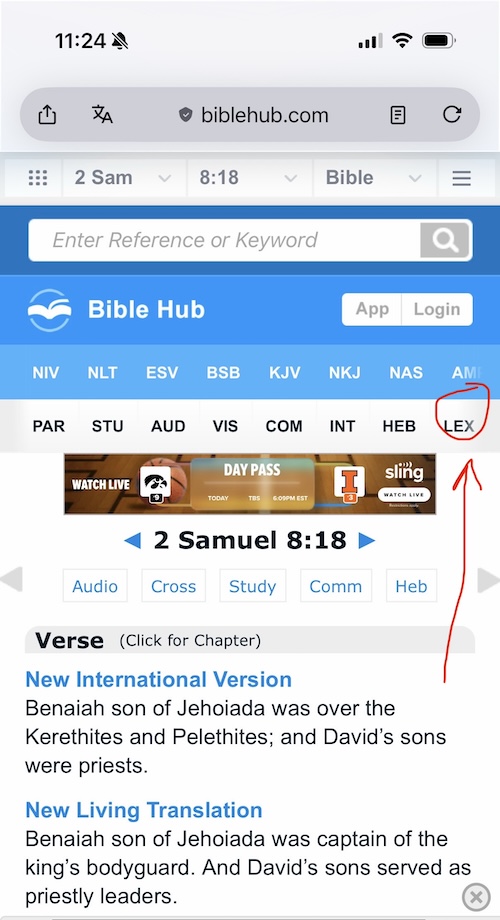
Apparently, this is a known discrepancy. Bible Hub is my favorite free resource for viewing multiple translations side by side. And the Lexicon button shows the Greek or Hebrew of the verse. If you click on a word, you can see where else it shows up in the Bible. The word used for priest regarding David’s sons does not refer to the official Aaronic Priesthood.

It’s more likely that they were officials put in charge of ministering. Neither is it the same word that we use for a kingdom of priests according to the order of Melchizedek.

Appreciate the Internet with me for a minute. Previously, it would have taken a very special complementarian pastor to answer all of a girl’s questions without assuming she wanted to usurp his authority and/or sleep with him.

I know it’s not always that simple. Some things in the Bible have no clean answer yet. If you only have a few minutes to spend in a devotional each morning, the writer probably isn’t going to highlight the Psalm, “May his children be wandering beggars; may they be driven from their ruined homes,” with a touching personal story.

That’s because, translations aside, there is tension in the Bible. It is a place where often two things are true. Consider when Jesus broke the law, broke the written law and healed a man on the Sabbath. He said in John 7:24, “Do not judge by appearances, but judge with right judgment.” He’s telling the Pharisees here that there’s something else besides the literal interpretation of what they have written down in front of them.

3. Do not judge God by what you know that you know

Because we only know a part, we have to make tea and settle into the mystery.

Consider that scholars were cranky because John the Baptist didn’t eat and drink, and equally cranky because Jesus did eat and drink.

Peter knew Christ was the Son of the living God. You can see how this plays out ten verses after he declares that truth. Peter knows what he knows and therefore contradicts when Christ tells them is going to die. Don’t judge God by the pain and death that we know doesn’t need to be happening right now. Like Peter, we don’t understand everything going on, and all the powers at play.

I believe it was the human weakness in Christ that needed to rebuke Peter’s temptation to not go to the cross. There wasn’t a problem with Peter being his normal inquisitive, impetuous self. With careful words we still call out that we don’t see any clothes on the emperor. Suppressing the thought gets you sideswiped by the enemy’s philosophies. When you tell yourself, “God is God—shut up and take the free ticket out of hell!”

The spiritual person judges all things, but is himself to be judged by no one. 1 Corinthians 2:15

4. Do not judge him on how you think something should play out

I have an annual Hallmark Christmas movie night with a writer’s group. We call out story elements, write, and rewrite the story as we’re watching. Some of the gals are shockingly spot-on, as though they wrote the screenplay. I like to try guessing cheesy lines and say them just before the character does. But genre fiction follows a predictable story arc with mandatory components. There is a reason people love it. No surprises equals “emotionally safe.”

My dad asked me when I released Stone of Asylum, “If I read this story—is it going to be worth it?” Not counting the cost for some people to suffer through a book at all—this is a question of whether he can trust me, the author, with his time and the ending. I told him, “Probably not.” My martial arts trilogy is a dark retelling of the Count of Monte Cristo. I explore the theme of revenge and how a story might unfold if a human had the power to exact it. I had fun—but my writing contains no gifts of comfort or reassurance for the reader. It takes trust to follow a writer to the end of their novel, whether or not you first check the last page to see who lives.

But even if we know “God wins,” it doesn’t mean every chapter is going to make sense. Acts 21 is interesting to me because the local church urges Paul “through the spirit” not to go to Rome. See, the Spirit revealed to them that Paul would die in Rome. One man prophesied that the owner of this belt will be bound “like this.” And Paul asked them, “Why are you weeping and breaking my heart?”

Paul knew what he was called to do. He had been told that he would stand before Caesar. The same Spirit showed both Paul and the believers the same thing, but because humans have autonomy, they had different reactions to what should be done with that information. This dethrones the idea that “I have word from the Lord for you” also means “I understand all the details and here’s what you should do with your life.”

It also reveals that even if we have a promise, the path to get there isn’t predictable like genre fiction. Abram experienced famine, war, kidnapping, and years of barrenness before his promise came. David was anointed king, but the path involved running for his life, losing his best friend (who had sworn to be his second) as well as a lot of crafty political maneuvering and marriages before he established Jerusalem as the political and religious center.

As we wait for our promises with the assurance that God will wipe every tear—understand this reality: it just means there will be tears.

He knows we will judge his trustworthiness based on his fulfillment of promises.
Fulfill your promise to your servant, so that you may be feared. Psalm 119:38.

5. Do not judge him by how others use his name

This is the one that I continually struggle with. I cannot for the life of me understand why God lets people do evil in his name. And I will leave it at that because I have no answer.

Won’t Ihen you see the phrase in the Bible, “For my name’s sake,” pay attention. Hebrews 6:13 says God swore by his own name because there was none greater. Blasphemy of the Holy Spirit is unforgivable, and most people try to reconcile “unforgivable” by saying it means rejecting the call of God even to the point of death, so you’re dead and your chance is over. But I wonder… is it not more serious than we realize when people blaspheme God’s name by falsely attributing good and evil to the point of drawing others away from him?

If people profane his name by committing atrocities and justifying it because they are “chosen,” the answer is not to cover it or look away. And it isn’t to decorate God’s actions with half-truth rationalizations. Elizabeth Eliot had a problem with the way Christians try to make God look good to defend him and said the way they fluff him is specifically a problem with Christian fiction. P. 126 & 129 Being Elizabeth by Ellen Vaughn.

It seems like many would rather protect the image of God than bear the image of God, especially when it is maligned. And protection is only needed if you do not believe he can protect his own name.

The problem of sin

The problem of sin/pain is a problem of free will and how we think God should deal with both.

Hold the tension of when Peter was indignant/ashamed/confused that Christ had de-robed and kneeled down to wash Peter’s feet. Like in so many other places, I’m glad here, Peter didn’t throw away his challenge, pretending he could see clothes.

I’m finishing a Lenten devotional this week called 40 Days of Decrease by Alicia Britt Chole. She highlights that at the Last Supper Jesus washed the feet of a betrayer, a denier, and ten deserters. He held the bread and wine out to each one, anyway.

Whether you are one of the ones who anointed him for burial weeks before, or you sit at this feast with questions and decisions—everything hangs on how you judge God.

And this is the point where we cannot cling without the grip of faith for parts yet unfulfilled or misunderstood. You can read the Bible prepared to be cranky when God eats and when he fasts—or you can look searching his loyal love. But we don’t need to pretend we see the emperor’s new clothes. Our naked king removed his own clothing and invites you to look upon him.

“God‘s character and conduct aught to win faith, not to be sustained by faith against appearances.” One of the essays in Rethinking Hell reiterates the invitation to a fallen world to judge who he is. “…we may be sure that the judge of the earth will do right, not merely in his own eyes, but in those of all his intelligent creation.” P. 199-201.

Chole also wrote in 40 Days of Decrease that the last time Judas spoke to Jesus he called him “Rabbi.” And the last time Jesus spoke to Judas, he called him “Friend.” The author explains, she remains “in that messy place theologically where God’s Sovereignty and human freewill co-exist.” P. 137.

I’m sorry that you came all this way and will not leave you with a tidy conclusion—save, trust the author to the end of the story. Confounding chapters of his grace play out everywhere you look—when you aren’t trying to write them.

Abide in me

Posted on March 14, 2025March 11, 2025 by Hilarey

A few years ago, one of my prayer partners received the word “abide” from God, and so we spent a fair amount of time talking about it.

But first, we had different definitions of what it meant, so we had to come up with a common language to communicate. I remember that one of the thoughts I had about its meaning was “to wait.” Someone else said “to rest.”

We were surprised when we looked it up because one definition is “to tolerate.” Think, “I can’t abide that.”

It’s come up again recently. My pastor shared that an image of abiding was like jumping into the ocean where you are completely consumed. You become part of the ocean, no self remains outside of it.

The Vine

Christ said if you abide me and I and you, then you will bear much fruit. Most translations say “remain.”

Even though there is a measurable end result of bearing fruit, I do not care for definitions of abide that require you to do good works. Works result from abiding, and there’s a difference.

I’ve heard it said in yoga class that Savasana or corpse pose can be the most difficult. This is that final part of the practice where you lay prostate, and try not to fall asleep. The reason it’s hard is that you have to make yourself do nothing. You actively rest.

Even though I don’t think you should define it by doing something, you won’t accidentally abide.

I define abiding as this same intentional rest, or actively obediently remaining. The active part is that you are making yourself stay. Stay still, stay present, stay with God. The obedient part is that you rest or remain and let him inside of you.

There’s a song I enjoy by Bob Millspaugh called Redemption. It has a Johnny Cash vibe, and my favorite line is, “The vine it grafted me, and I clung to the tree.” Spotify Version

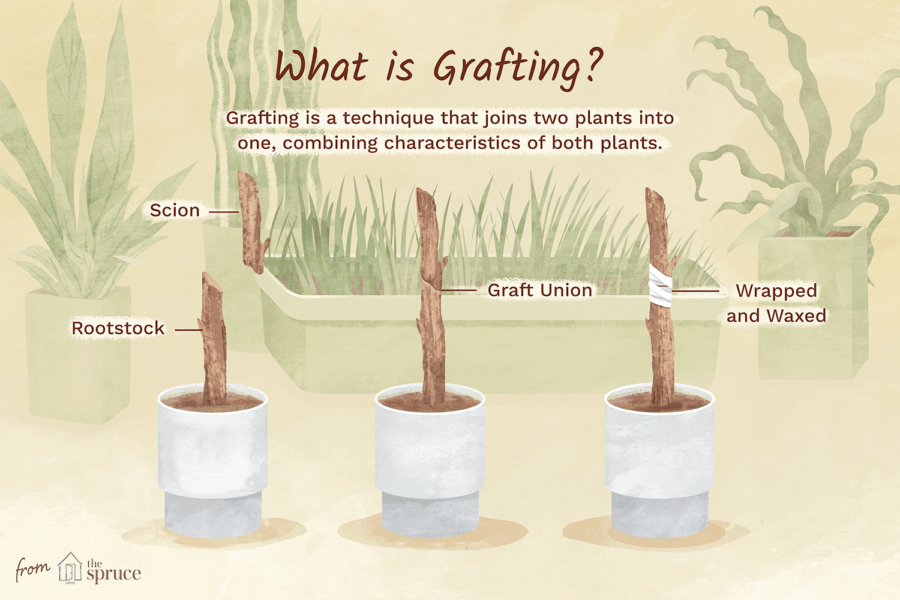
The image I see for abiding is always a grafted tree or vine. And that’s not by accident, it’s the description Christ uses in his command in John 15. But Paul also uses it in an illustration of how we’re brought into the family of God in Romans 11.

Grafting is fascinating. And most of the stone fruit trees I’ve planted were one variety grafted onto a different variety’s root system. I’ve never actually grafted something myself. But I’ve seen what’s called a fruit cocktail tree, where multiple kinds of fruit branches are grafted in.

You cut a branch at a particular angle from one tree, then cut a branch that same angle on another tree. Then you bind the branch of the first to the second. The graft must remain there until the wound seals and the juices from the tree flow into the branch.

As I mentioned in my post Praying Naked, sex can be more invasive for women. And so, I think women intrinsically comprehend the mystery. She takes something into her body which creates life and grows, but does not originate completely in her. There is a fear of losing herself as she allows it to radically change her. What was a woman now becomes a mother. Men can only observe this process.

I’m hardly the first to use the analogy of sex. And Christ said to take his blood and his broken body inside of you. So there actually is an opportunity for everyone to experience the metaphor.

You take something inside of you. Life begins. It fundamentally changes you. And then it produces fruit.

If you remain

Just as you won’t accidentally abide, I don’t believe you could accidentally lose your salvation. You can’t misplace it or have it stolen from you.

Even though I was raised there is no way to “lose” your salvation, both Christ and Paul gave intense warnings about not abiding or remaining. This is where I think the English definition “to tolerate” does not work. I don’t think God will just tolerate a diseased or non-producing branch. Paul warns that if the natural branches were broken off and removed because of unbelief, we should not be arrogant. Christ says the braches will be burned John 15 and Paul says we should not assume we will be spared Romans 11.

Actively, obediently remaining while nourishing sap flows through you.

God prunes healthy branches so they produce more fruit, and sometimes he prunes non-producing branches to stimulate growth. And sometimes he grafts new ones in.

The vine, it grafted me, and I clung to the tree.

One Body, One Hope—But it Looks Different

Posted on January 31, 2025April 5, 2025 by Hilarey

I didn’t mean to go so far over my 7 or 8 minute goal in one post. But when I skip weeks, it builds up. There’s a lot of verse links in this one, I hope you double check them all and spend some time pondering their validity. I’d love the conversation.

My favorite recipe app shut down at the start of winter. I wasn’t able to print or bookmark the recipes I’d saved. They are lost to me. It reminds me that years ago I had a daydream where I was reading a digital Bible, and the words started changing and updating to propaganda and lies while I read it. (Since I knew didn’t want to write an apocalyptic novel, I realized my imagination was telling me that I needed to know my Bible, not just know where it’s stored.)

And even still, I prefer the convenience of my digital Bible. Although I use Bible Project frequently, my favorite daily app is Olive Tree. I read through and start over. Occasionally, I try themed reading plans. Every year I am more in awe, and assured it is the Word of God. It always takes me much longer than a year to read through, and I just finished Revelation.

There is a lot going on in this book. And I’m currently contemplating how intriguing it is that even though there is one God, one body, one hope… Jesus Christ introduces and represents himself differently to the seven churches.

To the first church, he introduces himself as the one who holds the seven stars in his right hand and walks among the seven lamp stands. Revelation 2:1
To the second, he is the first and the last, who died and came to life. Verse 2:8
Then, he declares he is the one with the sharp two-edged sword. Verse 2:12
Next, he doesn’t have a sword. He tells the church that he has eyes like a flame of fire, with feet of burnished bronze. Verse 2:18
In chapter three verse one he describes himself with a similarity to the first church displaying seven stars. But now, he has the seven spirits of God with those stars.
In 3:7, he is the holy one, the true one. And he has the key of David; he opens what no one will shut and shuts what no one opens.
To the last church in 3:14 he is the Amen. The faithful and true witness, the beginning of God’s creation.

Superficially we can look at this is and realize, he’s different to different people. It’s true, you can find God in art, you can find God in science. If something is truly good, it comes from God, no matter the label. And even though Jesus is the only gate, we have to allow that some things look different from our different angles.

We can take that too far, though. The New Testament is clear that rejecting Jesus is rejecting God. We don’t want to risk making a god of our own design and saying all actions and paths lead to him.

Really, all paths lead to decisions. Continually, eventually, your decisions lead you toward or away from the heart of Christ. And just because you acknowledge that Jesus is the gate—or you have said that magic prayer—it doesn’t mean your decisions and actions are still running after his heart.

And, the decisions we need to make each day haven’t changed. I must decide if I am going to do what I want (or eat the fruit) and call my own choices wisdom. Listen, I don’t think Adam and Eve bit down in nervous, regretful, guilt. They rationalized that what they were doing was advantageous, desirous…smart. They elevated their choice with justification and reason. That’s how we end up blocked from the tree of life. It’s how we end up with everyone doing “what is right in their own eyes,” as demonstrated in the historical-chaos-accounts of the Old Testament.

The decision is still to do what he says is best for human flourishing—or to continue tasting and cultivating your palate toward bitterness, rage, anger, or immorality. And rationalizing it.

My path looks different from yours

However, I do giggle at the thought of one church saying to another that God Most High is clearly the one with the sharp, two-edged sword. And the other church replying, “Heavens no, you apostate from hell, God Most High has seven stars in his hand and walks among the seven lamp stands.”

And then the battle ensues. They slaughter each other for generations over the doctrine of swords and stars. Sometimes the church of the seven spirits helps, because after all, they have the commonality of the seven stars, and they can set the lamp stands aside for a minute to get rid of the sword church. Or at the very least, the factions split and they badmouth each other across town while the non-believers look on and roll their eyes.

We are told that our love for each other will prove we are disciples. Why then, is it so surprising that pseudo-love (sex) is more compelling to the world than our division and fear?

We see a greater totality of God when we’re connected to others who are different from ourselves and who see God differently. The church in Asia, the church in Africa, the church in Europe… the church across the street, all have things we don’t know about—and need. When the body is complete, we have access to all the body’s functions and resources. Swords and stars.

There is a similarity in Revelation after Christ introduces himself differently. In each of Christ’s messages to the seven churches, there’s a reward for “the one who conquers, is victorious, or overcomes.”

I believe the promises that follow the admonitions are for all who overcome, even though specific churches needed specific encouragements, and… specific warnings that pertain to particular broken things in their individual culture.

Here is the list of those promises: the one who overcomes gets to eat of the tree of life in the paradise of God (2:7). The one who overcomes will not be hurt by the second death (2:11). They will get some of the hidden manna and a white stone with a new name written on that stone that no one knows (2:17). They will have authority over the nations, to rule. And they will receive the morning star (2:26-28). They will be clothed in white garments, their name will never be blotted out of the book of life and Christ will confess their name before the father and angels (3:5). They will become a pillar in the temple of God, never to leave it. And Christ says he will write on them the name of his God, the name of the city of God…and Christ’s own new name (3:12).

To be completely transparent about why I say all of those rewards apply to all the churches: It’s because I tend to take all the promises from the Bible for personal application—if not direct receipt. I cling to David’s promises in the Psalms as something I have access to. But, to be fair, I also believe all the warnings still apply to me as well. It’s not à la cate: good stuff for me, and the warnings for the Jews.

Your path looks different from mine

This is not the only time God looks different. Our unique brains, cultures and experiences make it difficult to agree on how to build a compost pile, much less how to live in sincere peace with God Most High. So, our multifaceted Christ also pursues us differently according to our individual needs. Sometimes he comes after us like the shepherd who leaves the flock behind, to search us out. Then, carries our trembling hide home with more rejoicing than he has for the 99.

But sometimes, he waits patiently for us to return like the prodigal father. Running to us only after we turn toward home. Waiting until we want him, before he falls on our neck with a kiss.

Sometimes he draws us into the pain of the wilderness to remove our distraction, or semblance of strength, and to see our need. He wants us to experience calling out to him so we can experience his answer.

Sometimes he wants us to wait patiently for him. And don’t think you can experience “patiently” without a difficult stretch of time in longing.

Different reactions to the choice

In the parable of the dinner feast, Christ says in Luke 14:16–24 that many people have excuses for why they cannot come to the feast, or at least come right now. The excuses are interesting to me: owning land, working, getting married. All things greatly valued in American Christendom. Is it not ironic that we preach “Get a job, buy dirt, make a bio family and then you’ll experience God’s blessing…” when those are the specific entrapments that actually kept people from going to the feast in the parable?

We’ll just skip over the obvious parable of the same seed falling on different soil and consider the varied reactions when Paul preached in Athens in Acts 17:22-34. Some laughed, some said they’d hear more later, and some believed. I think the ones who go to church every week, tell other people they’re going to hell, while rationalizing their own discrete sins, are the “We’d like to hear more on this topic” group.

When Jesus raised Lazarus from the dead in John 11:44, the people who watched reacted in two different ways. “Many of the Jews, therefore, who had come with Mary and had seen what he did, believed in him, but some of them went to the Pharisees and told them what Jesus had done.” Verses 45 & 46.

Even though a dead man had been restored to life—they were more concerned about upsetting their societal structure, their man-made religious government.

And then, even some of those who believed the miracle of Lazarus still rejected the call to live it out. John 12:42-43 says “Nevertheless, many even of the authorities believed in him, but for fear of the Pharisees they did not confess it, so that they would not be put out of the synagogue; for they loved the glory that comes from man more than the glory that comes from God.”

Different reactions to the ongoing choice

Freewill is obviously destructive to the world. But, don’t forget: freewill from believers hurts people just as much. It is possible to go on sinning deliberately after receiving the knowledge of truth. Just because you walk through the gate, it doesn’t mean you loose the dignity of your free choice.

In Matthew 21:28-32 the parable is of two sons—so I think of them as children of God, as believers. Did you think after your wedding day that you would never have another decision regarding your sexual morality? Did you think it would always be the easy, first choice to obey God after conversion? In actuality, once abiding has reigned in some of the outwardly demonstrated sins like rage and drunkenness, you can start to feel the less obvious inflammation of subtle diseases, like jealousy.

Those continual choices of submission, after we come to the Lord, actually increase. The boys in the parable were told to work in the vineyard. One said no, but then later went. One said yes, but did not go. Jesus asked the men who had dedicated their entire life to studying the scriptures, “Which son obeyed?”

These devout men said it was the first who obeyed. Because action matters more than the promise, right? Here’s where Jesus gets insult-y. He replied to them the worst, most unlikely converts, and outcast enemies of your society will enter heaven before you. Verse 32.

Hmm, are there any unlikely converts and outcast enemies according to your church’s “about page”?

We’re missing something if we think either obeyed. So don’t bother giving lip service to God or others about your faith. Prove it with your actions and your love.

The same answer

Ok, so different parts of the body, different angles of view, but our obedience will have similarities. We get hung up on allowable and cultural differences like who’s in the buffet line for sacrificed meat—but submission is evident by fruit of the spirit.

Also, allow that in all our differences, we also grow and learn at different speeds. But make no mistake. Jesus said, if you love me, you will keep my commands. The follower of Jesus won’t be the one who tells others to obey from blog, podcast, pulpit or book. Even Paul said he could be disqualified while leading others to God—if he wasn’t careful. Nor will true followers be the one who merely prophesy in his name…or who do amazing miracles. It will be the one who practices abiding in love and obedience.

We mistake God being for long-suffering with us, as permission, and his long-suffering with others, as participation in evil.

This bucks at the “Grace is so dang cheap, it’s free!” doctrine I’ve met along the way. I’m still working through it, but it jolts me every time I read, “Not all who cry Lord, Lord, will enter heaven. But only the one who does the will of my father.” Matthew 7:21

He is still calling you

Since some will stand before God at the end and be surprised that he says, “I never knew you,” we should rethink the once-saved-always-saved, one-and-done-magic-prayer, and then live-like-hell-in-religiosity (while condemning the unlikely converts and outcast enemies) religion. I used to tell myself that the ones who cried out “Lord, Lord” were probably going to be the other orthodox or Episcopalians. Just some denomination I didn’t belong to and didn’t know much about. But no, I am the church.

And if you think there is submission involved in coming to the end of yourself and understanding that you need God for salvation… ponder the submission it takes to daily choose his way against your desire. To hourly accept letting go of the things you want, and understand, and are familiar, for the things that he says are better.

Believer, he is still calling you to more, to go deeper. Relinquish more. Abide more. Change more. Don’t ignore it. Hebrews 3 says it is an ongoing choice to not turn away from the living God.

Crowds surrounded him and wanted to be tangential to Christ. We can still mingle tangentially, prophesy and weep for the lost—but never submit to God. Because when Christ gave the call to the masses that surrounded him to follow and obey, not everyone did. Some had really good excuses. (Excuses are not the same as clarification, questions and wrestling with God.)

Look how it played out, Peter fell to his knees when Christ told him, “Follow me and I will make you a fisher of men.”
When James & John got the call, they left their dad & boat.
But other men he called said, “Let me first bury my dad,” or “Let me say goodbye to my family.”

As an adult, you get to live the life you want. Sure, only within your power and circumstance, but all your justifications, excuses and responses dictate your life. You have this ongoing choice to walk toward or away from the heart of Christ.

Is there anything you are waiting on, or need to take care of, or bury before you answer the call to go deeper?

Don’t waste your time saying goodbye to it.

The Heart, Mind and Soul of the Matter

Posted on October 25, 2024 by Hilarey

When my kids were still at home, we sometimes ate standing at the counter, buffet style, without plates. This was for charcuterie-type meals like chips, veggies, dip, cheese and crackers. It was typically a pre-holiday event so people could come and go. But sometimes, late, and after karate, it was just to get a meal started as we were still pulling food out. It could be a frenzy of laughing, talking, and reaching.

My son told me recently that even if the food itself isn’t comfort food, it is a comfort to him to have a meal this way because of the memory of it. He also said his roommate had no context for a family meal like this because his mom always plated his food.

I’ve done that, too. And I’ve known people irritated by their childhood mealtime because they had to clean their plate, but weren’t in charge of what was on it. So I’ve been thinking about the heart behind the action.

Picture a mom dishing up everyone’s plate. She chooses your portion and sets it before you. She could do it this way for more than one reason.

Maybe:
She wants to see your delight when she places the plate in front of you, and she’s simply helping you.
She is selecting the best cut of meat for you.
She is selecting the best cut of meat for herself.
She is selecting the best cut of meat for your volatile dad, so he’s appeased and everybody might get to finish dinner.
She doesn’t want to clean up after everyone else’s messy attempt to serve.
It is all about control, and she’s trying to make sure you don’t overeat because she thinks you’re fat.
It’s all about insecurity and she wants to remind you that the food comes from her, and her only personality in this season of life is feeding people.
There’s someone greedy at the table who would fish out all of the meat and leave everyone else only broth.
Someone’s hangry at the table, and it just streamlines the meal.
It’s the only thing she is in charge of.
It’s for love and worry that she wants to make sure you eat the right foods, not just white bread.
There is barely enough to go around and she is making sure that you get a fair portion.
Food is scarce, and she’s rationing to fund a second meal.
And maybe, she’s not just sure why her mom served everyone—but she feels like she can’t break tradition.

The thing is, you can only assume her motivation—and whether there is more than one motivation contributing.

This isn’t a post about forgiving moms for our eating disorders.

It’s just to describe why God is after our heart.

We are often very conscious of how our actions look or are perceived by others. But actions can be faked. They can just be a rule or a tradition. Actions don’t tell the entire story.

Just because there is a lack of a sin you can pinpoint and cry out, “There! That thing you did was wrong.” It doesn’t mean wrong wasn’t done.

Actions, Motivations and Iniquity

I’m reading Good Boundaries and Good Byes by Lisa Terkurst, and she writes, “I discovered iniquity points to the character or motivation of the action more than the action itself. So it’s not just what someone does or doesn’t do; it’s what her actions represent.” The author uses this to describe when we cannot really pinpoint something as a sin. More the “nuances of hurtful issues within human relationships that don’t clearly point to sin.”

The same tradition can bring life to one household and oppression to another. Even in the same house, a rule can be life-giving or demeaning. Not every one of my family members had pleasant emotions about those meals at the counter.

What’s the difference? Sometimes the situation or personality of the one who receives, affects it. The person who gets the food put on their plate. But mostly—the difference in how actions affect you is the heart behind it (or the rule and how it’s enforced.)

Anything can be twisted by motivation.

So be careful when giving or receiving advice, or following new parenting trends.

And damage isn’t only a result of a malicious motivation. So many things I did incorrectly as a parent were motivated by fear. Which seemed like it came from love, but it was still tainted because fear isn’t from God. I always want to be cognizant when fear motivates my actions.

And to try to turn over my heart. It isn’t just the sin of murder— it’s also the justification of anger. It isn’t just adultery—it’s the lingering.

Don’t Give Up

In those situations where the heart was sincere but the action still created pain and discord—I think the motivation of the heart is redeeming. I know a mom who asked her kids, “Yes, but… when you look back, can you ever say that I did not love you?”

And even if that question is not given a thoughtful answer, our God cares about our why. That’s not to say obedience isn’t required to follow him. But loving God with your heart, mind and soul comes first. Then, loving your neighbor as yourself follows. And that neighbor interaction has to overflow with sincerity of heart, or it gets weird.

“The LORD does not look at the things people look at. People look at the outward appearance, but the LORD looks at the heart.” 1 Samuel 16:7.

I think there can be dread to give God your heart because you think he‘ll make you change your actions. Our purpose isn’t so much to focus on whether or not mom should plate the food or what does God want me to do? But to let him in. To love him. To be loved by him.

God’s kingdom will not be brought by changing certain actions, voting, laws, force, hostile takeovers or outlawing sin. It is what the Jews wanted when Rome was oppressing them. It’s what many people want now, one world system to throw off the oppression of a different world system.

Neither will God’s name be glorified by a segregated utopia—yes, a holy people, sanctified and set apart—but not living behind a gate hoarding and protecting their resources of joy, love, and prosperity. When I was a child, I used to think Christians should be immediately raptured. I didn’t know why we had to live here. I thought God should just talk to individual hearts and then we should disappear.

God’s kingdom arrives through our internal renewal while we are still mucking around here in the mess. Sanctification comes from turning over our hearts.

God’s motivation

Some see God as punitive: he sent his son as punishment for our sins.

Some view our God as a reconciler: he created a path for us to be reunited to him.

(Actually, I think the difference might originate in Eastern Orthodoxy and western traditions.)

Does it matter though—if one of those statements is more true than the other… so long as you turn from sin and walk the straight and narrow? So long as the actions are “right,” and the food is served correctly?

Well, yes, it might a little, when it comes to trusting him with your heart.

These Ten Things

Posted on July 19, 2024July 22, 2024 by Hilarey

There was once a woman who perfectly copied her mother’s treasured pot roast recipe. First, she took the roast and cut off both ends. Then she put it in the pan, measuring water carefully… leveling each teaspoon of seasoning with a knife. She always set a precise timer. One day, while teaching the recipe to her daughter, her daughter asked why they needed to cut off the ends of the meat. So she went back to her mother.

“Oh,” her mother replied. “Because a roast doesn’t fit in my small pan.”

Tradition and Ritual

This story came from a pastor who was a product of the 60s Jesus Revolution. He thought traditions were often pointless.

Being a good-western-orthodox Protestant, I grew up scared of ritual and repetition. I also had a healthy distaste for tradition—being so close on the heels of the Jesus-freak movement. Liturgy was not in my vocabulary until my adult son defined it a few years ago.

But I remember the first time I watched a simulcast teacher and during worship they announced how many thousands of people were singing the same praises at that second. Tears flooded my eyes at the unity, the connection, even across culture.

If you consider the number of people who have said the Apostle’s Creed over the years, you realize it binds us with a linking thread, tethering us through wars and renaissance to a faith much older than our country.

Who doesn’t long for things that bring unity and stand the test of time?

I don’t believe God has ceased doing “new” in us or our world systems. I know he is infinite and we have truths still to discover along our trajectory of sanctification. I think he is still over-correcting some of human’s tangents and continually realigning culturally embedded preconceptions.

But I have found a place for tradition and ritual. And I regret dismissing it for so long.

Repetition

Since OCD was diagnosed in my family, I’ve better understood some of my own repetitive tendencies. I’ve learned why counting crochet stitches distracts a troubled mind… or listening to repetitive breath in lap swimming or meditation can clear it. I’ve discovered why the sound of rhythmic footfalls in walking or running soothes even before the endorphins kick in.

I think religious rituals can satisfy this part of the brain through repetition and redirection. Without being given a purpose, the can mind loop negative thoughts. The fears don’t even have to be real—although I’m sure you have plenty of genuine distress to choose from.

I found myself stuck last fall. So, around December, I decided to focus on what good God had put into my literal hands. I used my hands and the sensation of touch to ground myself. It was also symbolic to pull my attention away from the things I could not control. The things outside of my hands.

The idea might have originated from the verse that God inhabits the praises of his people. I assumed that fear would not fit in the same space as his habitation. Not to say there isn’t room for your pain with him—but thankfulness does a good job of organizing your mind. I have a friend who says that you cannot worry and be thankful at the same time.

Ten Things

Start by drawing the pointer finger of your right hand from the base of your left thumb at the palm. Drag it down the length to the end. Consider the tingling sensation of the touch. This counts as one, and say something you are thankful for. Then, move to the first finger, and so on. Five on one hand, five on the other.

Night after night, sometimes trying to go as fast as I could by memorizing them and sometimes reaching, searching for things to be thankful for. I have a friend who starts with her pillow.

I do it while tucked into bed, instead of praying (listing and counting) out my fears and worries. I decided there was plenty of time during the day to beseech God’s intervention and mercy. Looping all day, I wanted a break at night.

I tried not to think of anything except what I considered a blessing. And I typically picked five things I was thankful for about my husband, then five about my day. I did it because he’s my safest person, and during seasons where I need him most—I focus more intensely on driving him away.

When life is comfortable, and I slip into sleep easier, I tend to forget this rhythmic, tactile bedtime ritual. But a friend of mine suggested you need the routine of something already present in the rhythm of your life to remember to go to it when you are under stress.

My Protestant Prayer Beads

Recently, this same friend made Protestant Prayer Beads for our writer’s group board members. It was part of a one day retreat she designed based on the book Sacred Pathways.

I’d never even heard of safe, sanctioned, my orthodoxy, non-catholic prayer beads. But maybe that is because even though prayer beads are ancient, the idea of American evangelicals using them is newer. However, I discovered something beautiful about them, similar to my praise-counting ritual.

You cannot get (as) stuck on any prayer because there is another bead to move onto. You’re forced out of the negative, repetitive loop. It surprised me how I was able, in a tactile way, to leave it in God’s hand by moving mine.

We can fortify entire cities on top of one prayer request, thought, sin, or trial… More than getting stuck, it becomes our identity.

Do you want to be healed?

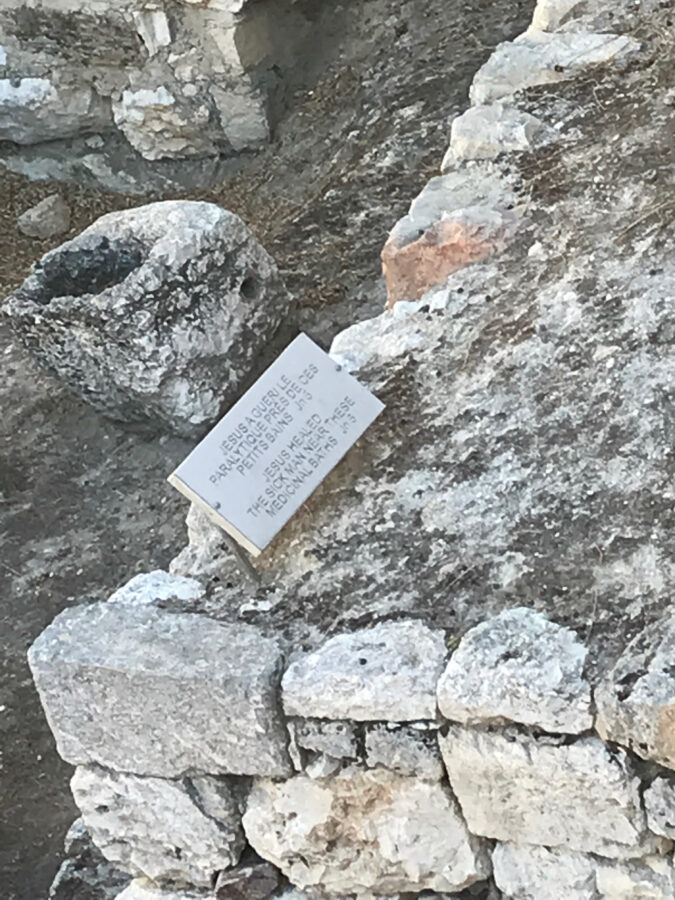
Isn’t it strange in John 5:6 that Jesus asked the man who had “spent a long time in his condition”, “Do you want to be healed?”

I wonder if waiting at the edge of healing is not the same as pursuing it.

I went to Israel with my Mom in 2018 and at the edge of the pool, her pastor reminded us that Jesus asked the paralytic that question before he healed him.
John 5:6 When Jesus saw him lying there and learned that he had been in this condition for a long time, he asked him, “Do you want to get well?”
Until the pain of change is less than the pain of staying the same, we will will not move.

What ten things are you thankful for?

  • 1
  • 2
  • Next
Judge Yourself & Let No One Judge You

Judge Yourself & Let No One Judge You

Just as you have to make self-examination/judgment a discipline, make accepting forgiveness and walking in light a similar “conscious discipline.” You look at your sin. You accept that you are...

Read More
Judge No One & Judge Others

Judge No One & Judge Others

2 of 3 | Part 1 Judge Yourself & Let No One Judge You | Part 2 Judge No One & Judge Others | Part 3 Judge God “So don’t judge...

Read More
Judge God

Judge God

Whether you are one who anointed him for burial weeks before, or you sit at this feast with questions and decisions—everything hangs on how you judge God....

Read More
In All Your Right-Rightness

In All Your Right-Rightness

They will know we are Christians by our doctrinal precision....

Read More
Of Mystics and Medicine

Of Mystics and Medicine

If it benefits humanity outside of a religious context, can the church still touch it? ...

Read More
Kicking Bricks & Flipping Tables prayers in cracks of the wailing wall, 2018

Kicking Bricks & Flipping Tables

I’ve heard foundations cannot be changed. (I feel like this is said when people describe how America was started as a Christian nation and therefore it could never not be...

Read More
The Wife Follower

The Wife Follower

the husband leader | the wife follower I’m realizing that questioning the husband-leader-dynamic is part of the larger debate about women in the church. (I’m usually late to the circus.) And...

Read More
The Husband Leader

The Husband Leader

the husband leader | the wife follower There was a time early in my marriage when my husband wanted to go into partnership with someone to buy a karate school. We’d...

Read More
Uncovering Paul

Uncovering Paul

Paul’s command in 1 Corinthians 11 to keep a woman’s head covered was more about protection and equality for the first century church than keeping a modern woman subservient in...

Read More
It’s Probably Her Fault

It’s Probably Her Fault

I loved the first cover of my first novel. Partly because, 11 years ago, it communicated to the reader: this isn’t going to be your typical Christian fiction. I didn’t...

Read More
A Ceremony of Grief

A Ceremony of Grief

Some kinds of deaths don’t have a memorial or funeral. It helps to have a ritual to mark the end of broken dreams so you can move on....

Read More
Dismantling Human Tradition

Dismantling Human Tradition

When I was young, I told my mom a name I wanted to give to a future child. Her quick response was that if my future husband had ever known...

Read More
Take Luck

Take Luck

Someone who is a Christian, but doesn’t read the Bible, is really susceptible to the weird tangents of Christian religion. Taking someone else’s word for what the scriptures say inevitably...

Read More
One Body, One Hope—But it Looks Different

One Body, One Hope—But it Looks Different

Jesus Christ introduces and represents himself differently to the seven churches. Superficially we can look at this is and realize, he’s different to different people. It’s true, you can find...

Read More
Abide in me

Abide in me

A few years ago, one of my prayer partners received the word "abide" from God, and so we spent a fair amount of time talking about it. But first, we had...

Read More
Giving, Accepting and Celebrating Love

Giving, Accepting and Celebrating Love

I received some council this week, which I desperately needed. And I will share some of my thoughts processing it in honor of today. If you swing from opposite ends between...

Read More
Your Own Hands

Your Own Hands

I love the hopeful newness of January. I like resolutions. Although, if you were raised to believe you had to honor your word, it is a little painful to promise...

Read More
Violence on a Soul

Violence on a Soul

My husband and I are reading “The Ruthless Elimination of Hurry.” One night, we came across a phrase that made both of us pause—but we’d had very different reactions. The phrase...

Read More
So Many Voices

So Many Voices

What do you do when lies are shared from the pulpit? Do you get up and quietly leave? Do you create dissension with your whispering and try to stage a...

Read More
The Heart, Mind and Soul of the Matter

The Heart, Mind and Soul of the Matter

The same tradition can bring life to one household and oppression to another. Even in the same house, a rule can be life giving or demeaning....

Read More
Sonship and Citizenship

Sonship and Citizenship

I remember standing on the deck of a beautiful home in Tahoe for a home group gathering. The leader responded to my compliment about the view, his home, and yard...

Read More
Praying Naked

Praying Naked

Even though I only wanted to escape eternal burning and torture, I know my 11 year old conversion was real, because after, I felt compelled to promise to God that...

Read More
My Elevator Pitch

My Elevator Pitch

I remember when I first moved to the Boise area. I didn’t work outside the home, or know anyone, so at church I tried to introduce myself. Every week. In the...

Read More
Please Wait, Still (Verbal) Processing…

Please Wait, Still (Verbal) Processing…

Originally Posted on June 27, 2022 The day my daughter turned 18, she sought me out and asked breathlessly, “So, when does it happen?” I looked at her earnest face and...

Read More
These Ten Things

These Ten Things

There was once a woman who perfectly copied her mother's treasured pot roast recipe. First, she took the roast and cut off both ends. Then she put it in the...

Read More
You Missed the Boat

You Missed the Boat

A re-post since I'm cranky that I have covid again. Also, we lost the little guy in this video about a month ago. If sarcasm (the lowest form of wit)...

Read More
Your Villain… a Caricature

Your Villain… a Caricature

Is the enemy chaotic-evil and unredeemable? I learned in a writing class that no one is a hundred percent evil, so, writing your novel’s villain that way will actually make him...

Read More
I Am the Church

I Am the Church

I thought I'd get this blog going again sooner, but I spent the last several months creating a website for our writer's group and a narrating a...

Read More
Blessed is Everyone Who Eats Bread in the Kingdom of God

Blessed is Everyone Who Eats Bread in the Kingdom of

The first time I heard the scripture in Matthew 7:21-23, I quickly applied it to others. In subsequent readings, it unsettled me. I've come to a place where it keeps...

Read More
Your Redemption Draws Near

Your Redemption Draws Near

I once said to my grandma, "I wish Jesus would come back." It wasn’t during a trial. I think I was just feeling the irritation of living. I had a...

Read More
Children of the Wilderness

Children of the Wilderness

The Israelite children who grew up in the desert saw nothing but provision and miracles. They didn’t know that normal shoes wear down each year. They took for granted food...

Read More
Who, what, where, when, why the hell?

Who, what, where, when, why the hell?

Questioning hell When I first heard the gospel, it was good news. Everybody was going to hell where there would be eternal, unbearable punishment…wait, here’s the good part: I didn’t have...

Read More
Making Time for Intimacy

Making Time for Intimacy

Repost: Originally posted October 3, 2022 I’m trying to practice the rhythm of consistency, but sometimes it’s not possible. Last week’s blog was quarantined as non-essential and stayed inside. Rhythm There are people...

Read More
The Ordination of Humankind

The Ordination of Humankind

Twelve is a significant number in the Bible. There were 12 tribes of Israel, and Jesus chose 12 disciples. He even chose 12 knowing there would be one who was...

Read More
Just before you came in...

Just before you came in...

Years ago, I was at a home group where everyone discussed works versus faith. We're saved by grace through faith, but the idea of this necessary component of works comes from...

Read More
Here's What You Need to Do

Here's What You Need to Do

Recently, we watched a television series called Ted Lasso. It's about an American football coach who goes to England to coach a British football team (soccer). There are three guys...

Read More
Uncovered

Uncovered

I once asked my pastor why a woman had to have her hair covered in church. He gave me so many words that it was clear he didn’t know. During...

Read More
What No Eye Has Seen

What No Eye Has Seen

I’ve been contemplating hell for the last year and a half, and I’ll post about that soon. But first, I wanted to share some thoughts about Heaven. Just musings. I...

Read More
My Immortality

My Immortality

In literature, you often see a closing image that highlights or completes the opening image. It can be for good or for bad. It brings the theme full-circle. Sometimes it’s...

Read More
Unquestioning Obedience

Unquestioning Obedience

I think I always trusted that you could wrestle with God, but felt there was a warning, or at least a caveat. If you wrestle with him, you’ll come away...

Read More
The Things That Are God's

The Things That Are God's

I'm not thinking of taxes, yet. I will be in a few weeks when I sit down to organize everything. I'm just thinking about how much I love the interaction...

Read More
Tramplin' all the way. Ha Ha. Ha.

Tramplin' all the way. Ha Ha. Ha.

Are your nativities put away and your Christmas cleaned up? If you were a Christian in the 90s, you may remember a saying, “If it became illegal to be a Christian,...

Read More
Oh the Molehills I've Died Upon

Oh the Molehills I've Died Upon

I believe there are mutually exclusive truths about God. I just don’t accept that humans have all the details—or that we will have them this side of eternity....

Read More
Before You Receive

Before You Receive

It's hard to be vulnerable enough to receive with thankfulness. Don't make these assumptions when you receive gifts....

Read More
Before You Give

Before You Give

Things to think about before you give and receive gifts in our privileged society....

Read More
On the Floor, Not at the Table

On the Floor, Not at the Table

It’s my understanding that sitting at a Rabbi’s feet showed a posture of learning. You were their disciple if you sat at there. This is why it was so significant...

Read More
For Your Viewing Pleasure

For Your Viewing Pleasure

You weren’t made for the sole viewing pleasure of the masses....

Read More
The Hevel that You Know

The Hevel that You Know

The point of our life is not to vote for the hevel that you know, but to bring God’s kingdom to earth as it operates in heaven....

Read More
Why You Matter

Why You Matter

Last weekend I spoke at the first Fall Gathering for IdaHope Christian Writers and I wanted to share my talk here....

Read More

Help change a life

Visit Cure.org to contribute

Subscribe

You can receive this blog always unsubscribe by email.

Writing devos by Hilarey

Hilarey is the President of IdaHope Christian Writers in Boise, Idaho.

Hilarey recently read

Yours Truly
Part of Your World
Wishing for Mistletoe
Book Lovers
Iron Flame
Tiny Beautiful Things: Advice from Dear Sugar
A Girl Called Samson
Scythe
The Unknown Beloved
Whalefall
The Honey Witch
Just for the Summer
Being Elisabeth Elliot: The Authorized Biography: Elisabeth’s Later Years
The Galveston Diet: The Doctor-Developed, Patient-Proven Plan to Burn Fat and Tame Your Hormonal Symptoms
Exiles: The Church in the Shadow of Empire
Fourth Wing
A Wrinkle in Time
One Summer in Savannah
Daisy Jones & The Six
Other Birds

Search this blog

Read more about

aging beauty Bible church-hurt churchyard community creativity deconstruction dismantling equality eternity family freedom freewill heaven hell intimacy with God intimacy with others irreverence love marriage nationalism priesthood privileges prodigals relationships remain on the vine traditions trust wisdom writing

Recent posts

  • April 3, 2026 by Hilarey Judge God
  • March 20, 2026 by Hilarey Judge No One & Judge Others
  • March 6, 2026 by Hilarey Judge Yourself & Let No One Judge You
  • October 10, 2025 by Hilarey In All Your Right-Rightness
  • September 5, 2025 by Hilarey Of Mystics and Medicine

Popular posts & pages

Unquestioning ObedienceUnquestioning Obedience
Abide in meAbide in me
Stone of AsylumStone of Asylum
©2026 Hilarey.com
 

Loading Comments...